SURPLUS STOCK
doing the dance ersatz!
Step through the mirror.
Into the jungle we call home.
Independent label for artists and projects.
OUTATUNE © 2025
back to the roots
Bob INTRODUCTION
ENGLISH
In 1976 I arrived in Quakenbrück with an Interrail ticket and no real plan. I was visiting an old friend from Bracknell, someone I had worked with in England. Her mother was German, and she told me about a bicycle factory where you could work for a few months and earn enough money to travel across Europe. I ended up working on the production line — and falling in love with her best friend.
My musical journey had already begun long before that, in Manchester. I had a guitar and a band — what you might call a bedroom band. We met four or five times a week and recorded everything live. Nothing was planned, everything was improvised. One of those recordings later became part of the first SURPLUS STOCK album: Song for 9 to 5.
Germany fascinated me immediately, especially the language. It was the time of punk. In England, the Winter of Discontent shaped everyday life — politically and socially. At the same time, I was writing for the independent punk magazine ZigZag. After an interview with Nina Hagen, my first article was published, followed by others. I found myself documenting a German music scene that was far removed from “Schlager” — raw, contradictory and full of energy.
My first productions were recorded at Cargo Studio in Rochdale, working alongside the German band Deutsch Amerikanische Freundschaft. It was an important moment — not only because of the collaboration, but because it was the first time I took on a real production role. Everything followed a simple idea: Just do it. No waiting, no perfection — just making things happen.
I met people who worked in the same way. I met The Fall, and people connected to Rough Trade and Factory Records. It was an intense and inspiring time.
In England I also began recording my own material. At Cargo Studio I recorded the track SPIV with friends from Manchester. We called ourselves SURPLUS STOCK. We had almost no money and recorded everything in a single day. That moment also marked the beginning of Outatune Records.
The single was pressed at Pallas in Diepholz. Since there was only one track, the B-side was simply SPIV played backwards — we called it VIPS. The cover was designed by the Düsseldorf art collective Art Attack. The record received positive reviews in Melody Maker and New Musical Express and sold surprisingly well in Germany, supported by a growing network of independent record shops.
From there, things began to take shape.
DEUTSCH
1976 kam ich mit einem Interrail-Ticket und ohne festen Plan nach Quakenbrück. Ich besuchte eine alte Freundin aus Bracknell, mit der ich in England zusammengearbeitet hatte. Ihre Mutter war Deutsche, und sie erzählte mir von einer Fahrradfabrik, in der man ein paar Monate arbeiten und genug Geld verdienen konnte, um anschließend durch Europa zu reisen. Ich begann am Fließband zu arbeiten — und verliebte mich in ihre beste Freundin.
Meine musikalische Reise hatte da längst begonnen, in Manchester. Ich hatte eine Gitarre und eine Band — das, was man eine Bedroom Band nennen würde. Wir trafen uns vier- bis fünfmal pro Woche und nahmen alles live auf. Nichts war geplant, alles improvisiert. Einer dieser Songs wurde später Teil des ersten SURPLUS-STOCK-Albums: Song for 9 to 5.
Deutschland faszinierte mich sofort, besonders die Sprache. Es war die Zeit des Punk. In England prägte der Winter of Discontent das Leben — politisch wie gesellschaftlich. Gleichzeitig schrieb ich für das Independent-Punk-Magazin ZigZag. Nach einem Interview mit Nina Hagen erschien mein erster Artikel, weitere folgten. Ich begann, eine deutsche Musikszene zu dokumentieren, die weit entfernt war von „Schlager“ — roh, widersprüchlich und voller Energie.
Meine ersten Produktionen entstanden im Cargo Studio in Rochdale, gemeinsam mit der deutschen Band Deutsch Amerikanische Freundschaft. Das war ein wichtiger Moment — nicht nur wegen der Zusammenarbeit, sondern weil ich dort zum ersten Mal eine echte Produktionsrolle übernahm. Alles folgte einer einfachen Haltung: Just do it. Nicht warten, nicht perfektionieren — machen.
Ich traf Menschen, die ähnlich arbeiteten. Ich traf The Fall und Leute aus dem Umfeld von Rough Trade und Factory Records. Es war eine intensive und inspirierende Zeit.
In England begann ich auch, eigenes Material aufzunehmen. Im Cargo Studio entstand der Song SPIV, zusammen mit Freunden aus Manchester. Wir nannten uns SURPLUS STOCK. Wir hatten kaum Geld und nahmen alles an einem einzigen Tag auf. Das war zugleich der Beginn von Outatune Records.
Die Single wurde bei Pallas in Diepholz gepresst. Da es nur einen Song gab, bestand die B-Seite aus SPIV rückwärts — wir nannten sie VIPS. Das Cover entwarfen die Künstler von Art Attack aus Düsseldorf. Die Platte bekam gute Kritiken im Melody Maker und im New Musical Express und verkaufte sich in Deutschland überraschend gut — getragen von einem wachsenden Netzwerk unabhängiger Plattenläden.
Von dort aus nahm alles seinen Lauf.
back to the roots
SURPLUS STOCK
ENGLISH
SURPLUS STOCK was never a fixed band. It was a moving project — shaped by changing line-ups, ideas and circumstances. Looking back, it falls into a number of distinct phases.
It began in 1979 with a small group of friends from Manchester. At that time I was already living in Germany, but the first recordings were made at Cargo Studio in Rochdale — a place where bands like The Fall, Joy Division and Gang of Four had worked. We had almost no money and recorded everything in a single day. The result was the single SPIV / VIPS.
With only one track available, the B-side was simply the same recording played backwards — a typical decision of the time. Around this release, Outatune Records was founded.
In 1980 the first album followed: Holland in Not. The title — deliberately in German — reflected a sense of tension and instability. Musically, the material moved towards electronic structures, but remained rooted in everyday life in Quakenbrück. The track Take It became an unexpected club success and was regularly played in venues like Fiz Oblon and Hyde Park.
During this period, Gisbert Wegener became a key partner, and Outatune Records developed into a platform not only for SURPLUS STOCK, but for other artists as well.
The single Let’s Kill Each Other began as a solo track for the Fix Planet compilation on Atatak Records in Düsseldorf. A new version was later recorded at Cargo Studio with a different line-up and mixed at Hafenklang Studio in Hamburg by Peter Cadera. On drums was Chris Schnaak, and one of the earliest recordings of Tex Morton also came out of this session. The track marked a shift towards a more direct and confrontational sound.
With the 12″ EP Dance Ersatz, SURPLUS STOCK became more of a band. The line-up included Wissi, Harald Schmidt (Dorfcafé), Tex Morton and a very young Carsten Möhring. The record was released on red vinyl and distributed internationally through Rough Trade. Tracks like Lady Is a Tramp and Ladies Day combined reinterpretation with original material.
In 1984, the album Maverick Intention marked another turning point. For the first time, recording moved away from Cargo Studio to Harderberg Studio in Osnabrück. The line-up expanded to include Tex Morton, Käse, Achim Färber, Manfred Schulz, Stephan Groß and, for the first time, Heinz Rebellius, beginning a long-term collaboration.
The album includes Terminal Cancer, a very personal piece dedicated to my father. The cover artwork was created by my son Mike at the age of three. Following the release, the band toured Germany and completed a one-week tour through Hungary.
By 1985, SURPLUS STOCK came to an end. The final release was the live album Thanks for All the Flowers, recorded in Bremen, Köln and Kassel using a Tascam 388. The recordings were raw, direct and without overdubs.
It was the end of the project — or perhaps just the end of one phase.
DEUTSCH
SURPLUS STOCK war nie eine feste Band. Es war ein fortlaufendes Projekt — geprägt von wechselnden Besetzungen, Ideen und Umständen. Rückblickend lässt es sich in mehrere Phasen einteilen.
Die Anfänge reichen zurück ins Jahr 1979, mit einer kleinen Gruppe von Freunden aus Manchester. Zu diesem Zeitpunkt lebte ich bereits in Deutschland, doch die ersten Aufnahmen entstanden im Cargo Studio in Rochdale — einem Ort, an dem auch Bands wie The Fall, Joy Division und Gang of Four gearbeitet hatten. Wir hatten kaum Geld und nahmen alles an einem einzigen Tag auf. Das Ergebnis war die Single SPIV / VIPS.
Da es nur einen Song gab, bestand die B-Seite einfach aus der rückwärts abgespielten Version — eine typische Entscheidung dieser Zeit. In diesem Zusammenhang entstand auch Outatune Records.
1980 folgte das erste Album: Holland in Not. Der bewusst deutsch gewählte Titel spiegelte ein Gefühl von Spannung und Unsicherheit wider. Musikalisch bewegten sich die Stücke stärker in Richtung elektronischer Strukturen, blieben aber im Alltag in Quakenbrück verankert. Der Titel Take It entwickelte sich zu einem unerwarteten Club-Hit und lief regelmäßig in Läden wie Fiz Oblon und Hyde Park.
In dieser Phase wurde Gisbert Wegener ein wichtiger Partner, und Outatune Records entwickelte sich zu einer Plattform — nicht nur für SURPLUS STOCK, sondern auch für andere Künstler.
Die Single Let’s Kill Each Other entstand zunächst als Soloarbeit für den Sampler Fix Planet auf Atatak Records in Düsseldorf. Später wurde eine neue Version im Cargo Studio aufgenommen und im Hafenklang Studio in Hamburg von Peter Cadera gemischt. Am Schlagzeug spielte Chris Schnaak, außerdem entstand hier eine der ersten Aufnahmen von Tex Morton. Der Track markierte eine Bewegung hin zu einem direkteren und konfrontativeren Sound.
Mit der 12″-EP Dance Ersatz entwickelte sich SURPLUS STOCK stärker zu einer Band. Zur Besetzung gehörten Wissi, Harald Schmidt (Dorfcafé), Tex Morton und der sehr junge Carsten Möhring. Die Platte erschien auf rotem Vinyl und wurde international über Rough Trade vertrieben. Stücke wie Lady Is a Tramp und Ladies Day verbanden Neuinterpretationen mit eigenem Material.
1984 markierte das Album Maverick Intention einen weiteren Wendepunkt. Erstmals wurde nicht im Cargo Studio, sondern im Harderberg Studio in Osnabrück aufgenommen. Die Besetzung erweiterte sich um Tex Morton, Käse, Achim Färber, Manfred Schulz, Stephan Groß und erstmals Heinz Rebellius, womit eine lange Zusammenarbeit begann.
Das Album enthält unter anderem Terminal Cancer, ein sehr persönliches Stück, das meinem Vater gewidmet ist. Das Cover wurde von meinem Sohn Mike im Alter von drei Jahren gemalt. Im Anschluss an die Veröffentlichung tourte die Band durch Deutschland und absolvierte zusätzlich eine einwöchige Tour durch Ungarn.
1985 endete SURPLUS STOCK. Die letzte Veröffentlichung war das Live-Album Thanks for All the Flowers, aufgenommen in Bremen, Köln und Kassel mit einem Tascam 388. Die Aufnahmen sind roh, direkt und ohne Overdubs.
Es war das Ende des Projekts — oder vielleicht nur das Ende einer Phase.
NOW IN PRODUCTION
The Rising Drumbeat of Discontent
Four songs. One pulse. A mirror.
A peaceful protest.
A reflection on our times.
The return of SURPLUS STOCK with help from CLIFF BARNES and the Fear of WINNING and a lot of friends

SPIV - 7" SINGLE
In 1979 Bob made the first Surplus Stock record. It was the single SPIV/VIPS. Bob was already in Germany then, but the band recorded in the legendary CARGO STUDIO in Rochdale. Home of such amazing recordings by The FALL, JOY DIVISION and the GANG OF FOUR. Bob had recorded here with DAF earlier in the year.
BAND MEMBERS: BOB, PHIL RENSHAW & ROBERT CLARKE
Released: 1979 – Label: OUTATUNE (OUT 7911)
SPIV - RECORD NOTES
In England I took my first steps as an artist. At Cargo Studios I recorded SPIV with friends from Manchester under the name Surplus Stock. We had almost no money and recorded everything in a single day — it also marked the beginning of Outatune Records.
The single was pressed at Pallas in Diepholz. With only one track, the B-side became SPIV played backwards — VIPS. The sleeve was designed by Art Attack (later Atatak) in Düsseldorf. The record received strong reviews in Melody Maker and NME and sold surprisingly well in Germany, driven by a growing network of independent record shops.
From there, things began to take shape.
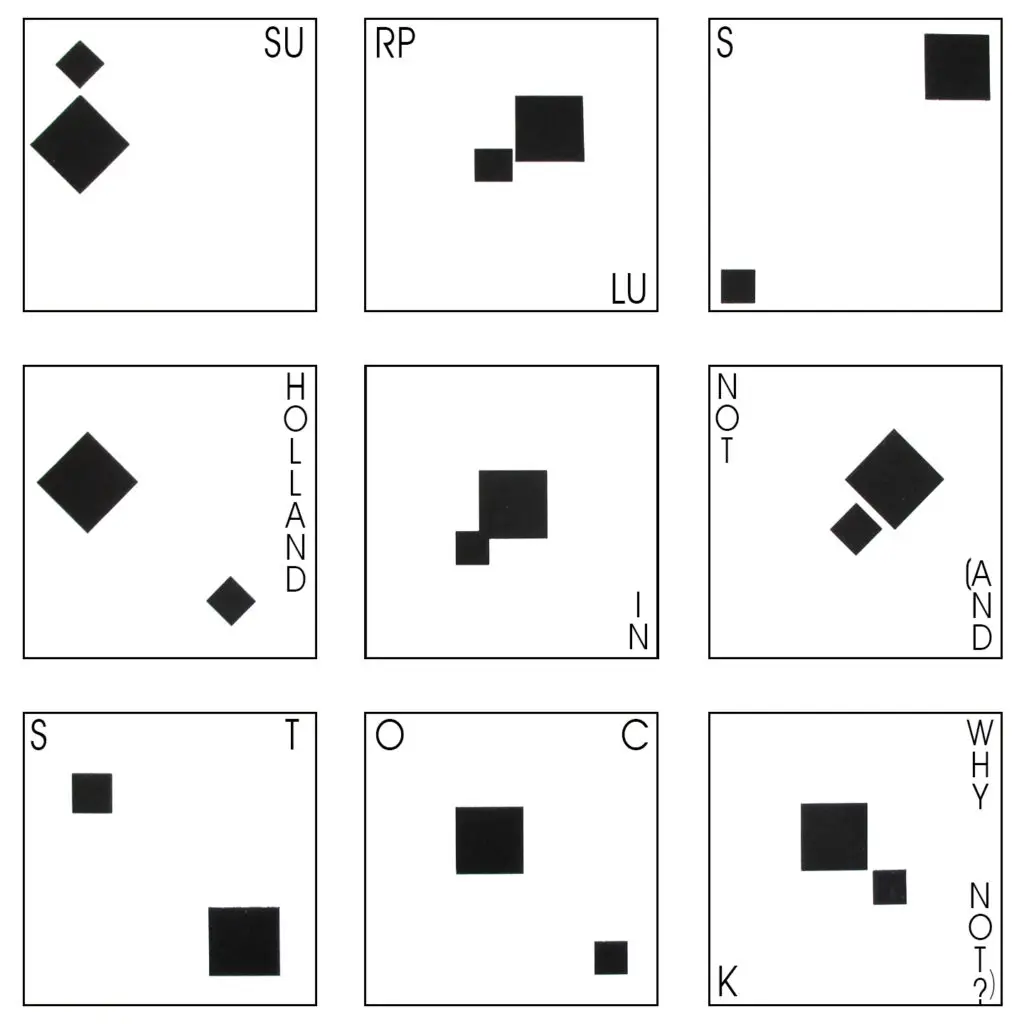
HOLLAND IN NOT - LP
Holland in Not, the debut Surplus Stock LP, was recorded in April 1980 at Cargo Studios in Rochdale, alongside key post-punk acts of the time, and remastered from the original vinyl in 2023.
SURPLUS STOCK: Bob, Phil, Josef
Released: 1980 – Label: OUTATUNE (OUT 8004)
HOLLAND IN NOT - ALBUM NOTES
Credits:
Robert Giddens: Synthesiser and Vocals
Phil Renshaw: Guitar
Josef Schenk: Drums
Robert Clarke: AWOL
The Stockettes (Gary Giddens, Ian Derbyshire, Rob Risko, Phil Falsetto): Backing Vocals
Engineered by John Brierley
Produced by John Brierley and Robert Giddens (April 16-19, 1980)
Recorded at the very wonderful Cargo Studios in Rochdale, UK
Cover by Ilse Hudepohl and Surplus Stock
Remastered in August 2023 by Marcus Praed in the Mühle der Freundschaft Studio in Bad Iburg, Germany.
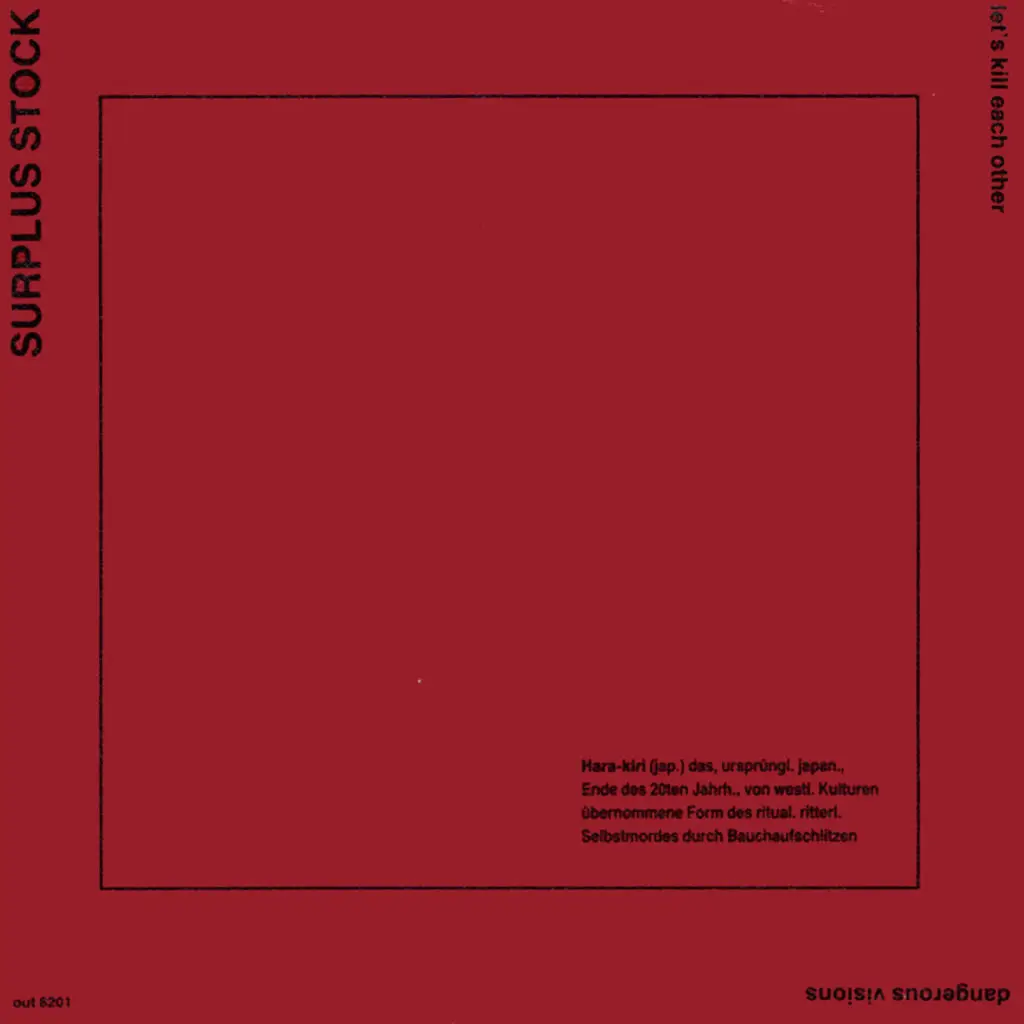
LET'S KILL EACH OTHER - 7" SINGLE
A single featuring two songs: Let’s Kill Each Other and Dangerous Visons. Both had visionary attitude. Looking at what proved to be a very dangerous world situation. Now, almost 50 years later, it seems we have learned nothing.
SURPLUS STOCK: Bob, Phil, Chris, Peter (or Tex) as we know him. With guest musicians Nigel Stonier (on bass) and Mike Atkinson (on trumpet).
Released: 1980 – Label: OUTATUNE (OUT 8004)
- Listen on Bandcamp
LET'S KILL EACH OTHER - RECORD NOTES
The LET’S KILL EACH OTHER single. Bob’s original solo version was written and recorded for the FIX PLANET SAMPLER, which the Düsseldorf ATATAK Records released. Bob rerecorded a different version with a different band. Still using CARGO STUDIOS for the recording, but this time mixed in Hamburg at HAFENKLANG by PETER CADERA. Featuring CHRIS SCHNAAK on drums (originally from Essen, Oldenburg and one of the first recordings of a young TEX MORTON.
The Band was augmented by some fine studio musicians: Mike Atkinson on trumpet and Nigel Stonier on bass. The cover design was by Heinz Peter Dubiel.
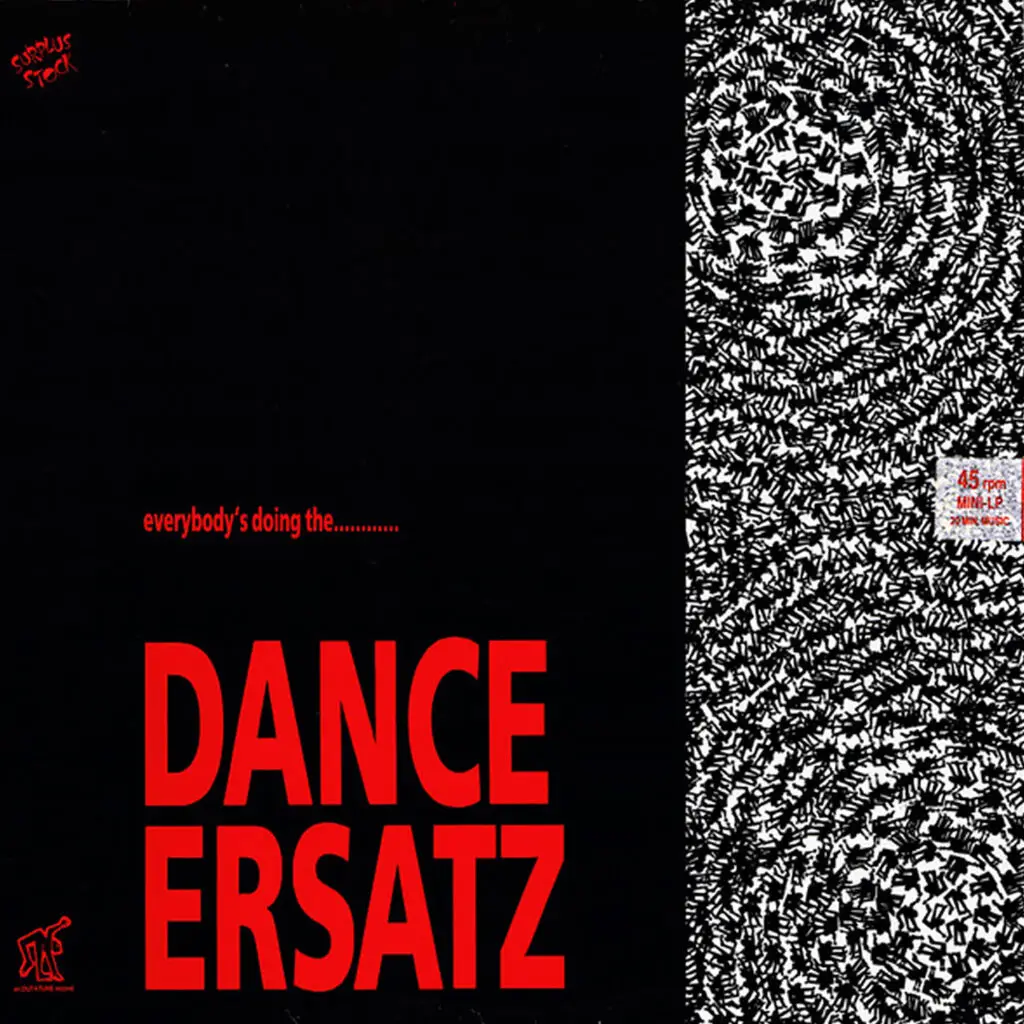
DANCE ERSATZ - 12"
Holland in Not, the debut Surplus Stock LP, was recorded in April 1980 at Cargo Studios in Rochdale, alongside key post-punk acts of the time, and remastered from the original vinyl in 2023.
SURPLUS STOCK: Bob, Phil, Josef
Released: 1980 – Label: OUTATUNE (OUT 8004)
- Listen on Bandcamp
DANCE ERSATZ - ALBUM NOTES
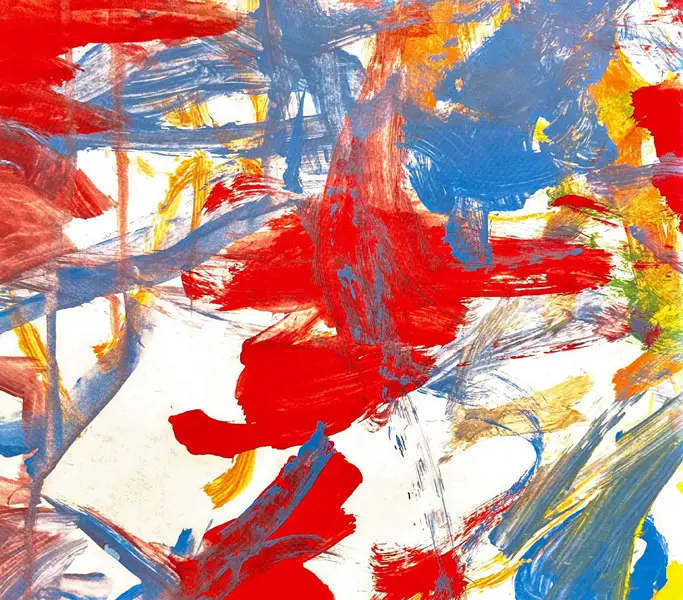
MAVERICK INTENTION - LP
The disconcerting Orwellian year of 1984 was celebrated with the MAVERICK INTENTION LP. This was the first SURPLUS STOCK record that was not made in CARGO STUDIO. It was recorded in the HARDERBERG STUDIO in Osnabrück.
SURPLUS STOCK: Bob, Tex, Heinz, Käse, Stephan, Manfred, Achim
Released: 1984 – Label: OUTATUNE (OUT 8401)
- Listen on Bandcamp
MAVERICK INTENTION - ALBUM NOTES
The disconcerting Orwellian year of 1984 was celebrated with the MAVERICK INTENTION LP. This was the first SURPLUS STOCK record that was not made in CARGO STUDIO. It was recorded in the HARDERBERG STUDIO in Osnabrück.
It featured class local musiciams like TEX MORTON, KÄSE, ACHIM FÄRBER, MANFRED SCHULZ, STEPHAN GROß and for the first time HEINZ REBELLIUS. Heinz and Bob started a long collaboration here, after meeting one evening in the legendary FIZ OBLON discotheque. This was where Bob met most of his musicians and also where he met important people like GISBERT WEGENER, CHRIS SCHAAK and HORST HÖRIG, who made the song TAKE IT from HOLLAND IN NOT such a dance hit. On MAVERICK INTENTION we re-recorded TAKE IT in a band version. This LP features some great songs like Bobs homage to his father who dies when Bob was very young of lung cancer. The song TERMINAL CANCER is split in two halves. The cover was a work of Bob’s son, MIKE, painted when he was three years old.
The band toured this record through Germany and did a week touring Hungary which could be a whole new article.
Credits:
Bass, Synthesizer [Moog Taurus] – Heinz Rebellius
Drums – Achim Färber
Guitar – Manfred Schulz
Guitar, Bass – Carsten Mohring
Guitar, Bass, Piano, Saxophone, Clavinet – Stephan Groß
Guitar, Piano, Voice – Robert Giddens
Guitar, Voice – Tex Morton
Synthesizer – Martin Englert
Trumpet – Tom Heise
Voice – Claudia Mödden, Ulla Schmidt
Produced by Robert Giddens & Stephan Groß
Mixed by Robert Giddens & Stephan Groß
With help from Emilio Winschetti, Gisbert Wegener
Assistant engineer – Peter Eichler
Other [Coffee And Understanding] – Donny Rec., Josef Schenk, Giota
Painting – Mike Giddens
Cover – Frank Oelkers, H.P. Dubiel, Prevvo Techno
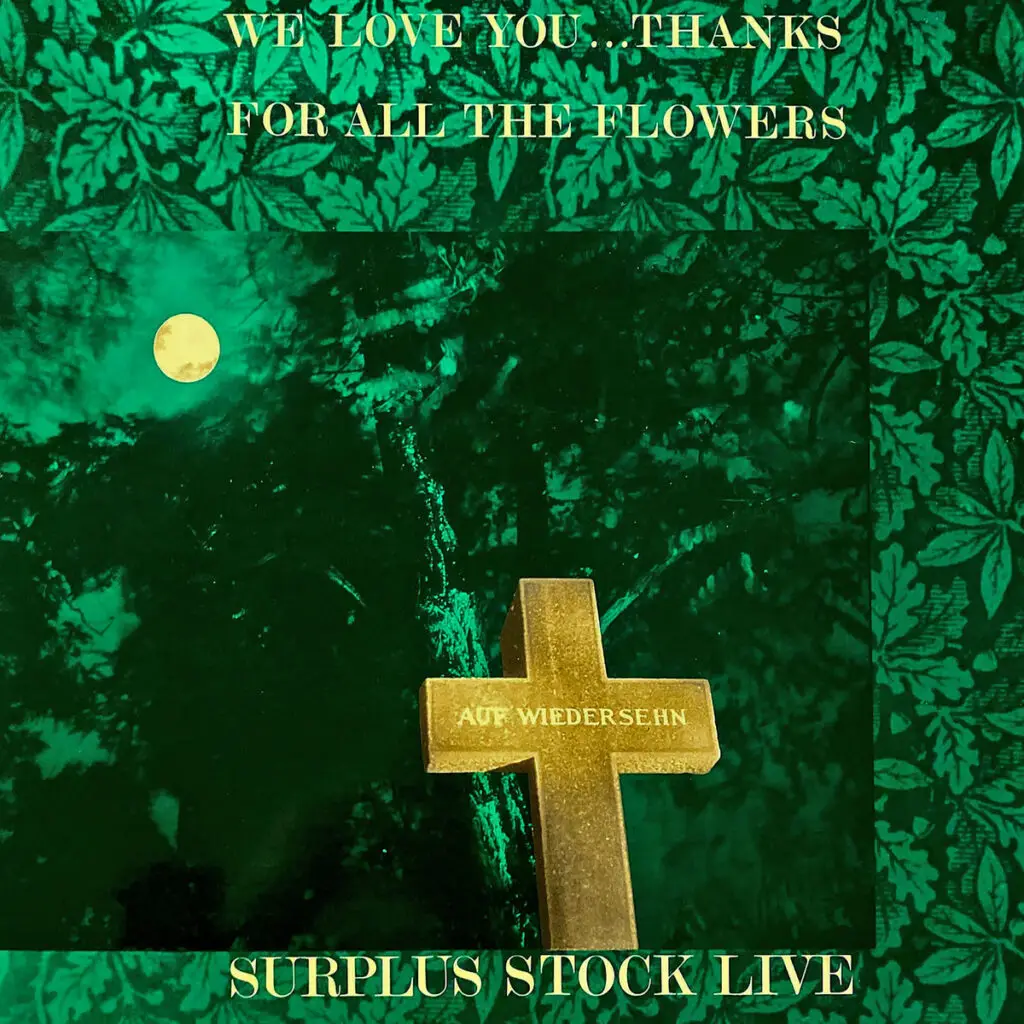
WE LOVE YOU - THANKS FOR ALL THE FLOWERS
Recorded LIVE in 1985. It was the last official Surplus Stock album release.
SURPLUS STOCK: Bob, Heinz, Stephan, Achim
Released: 1980 – Label: OUTATUNE (OUT 8004)
WE LOVE YOU - ALBUM NOTES
Originally mixed at Studio Hardenberg by Stephan Groß and Martin Englert in 1985.